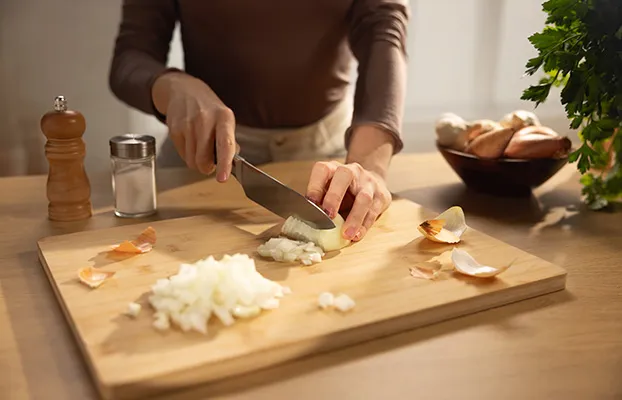
Onions are the starting base for many dishes, whether you’re cooking up a quick weeknight stir-fry or you’re setting the stage for slowly simmered soups. While you might love the flavor onions bring to any dish, you may have come across one problem with them: fighting back the tears at the cutting board. The good news is that cutting onions doesn’t have to make you cry. In this practical guide, we’re here to save the day for home cooks as they dice, chop, and slice onions. Check out these science-backed hacks on how to chop an onion while reducing crying and learn the techniques that fit into your everyday cooking.
Why Knowing How to Cut Onions Matters
Cutting Styles, Flavor, And Timing
How you cut an onion influences its texture in the dish, the heat distribution, and also how long it takes to cook. A uniform 1/2-inch dice is ideal for stews where the onion gets to simmer smoothly, while a finer mince dissolve into a consistency that’s perfect for a velvety soup base. As you learn to slice, chop, and dice, you gain flexibility because recipes seldom specify exact knife moves, but the onion's behavior in the pan does. Practice cuts to speed prep and cut waste. If you’re curious how to chop an onion without crying, these techniques matter.
The cut you choose also alters flavor release:
- Coarser cuts of onion caramelize slowly and deliver a robust bite.
- Finer cuts of onion disperse flavors quickly and heat through faster.
- Finely chopped onions in soups melt into the broth.
- Sliced onions in stir-fries brighten without losing crunch.
- Well-chopped onions blend into sauces and gravies.
- Diced onions can anchor a hearty stew.
Practice helps you sense texture and balance in real cooking moments. If you’re exploring how to chop an onion, you’ll gain a sharper intuition for texture and balance.
step-by-step:How to Cut Onions
Get a stable and clean board and a sharp knife. A sharp knife will make the cutting go more smoothly and quickly, reducing your time with the onion. Start with a medium to large onion that’s about 3 to 4 inches in diameter.
A repeatable routine reduces mistakes and tears, especially when prepping multiple onions. By the end, you’ll be able to dice, chop, and slice with precise, repeatable motions that feel natural rather than forced. If you’re unsure how to cut onions, this routine will help.
How to Dice Onions
- Trim the top and bottom, peel, and cut the onion in half lengthwise.
- Place half of the onion, cut side down.
- Make horizontal cuts toward the root without cutting through it.
- Make vertical cuts from top to bottom to form a grid.
- Finish by slicing it across for evenly sized dice.
- Keep the root end intact until the end to hold the layers, then trim the root.
Practice with small onions to build rhythm, and you’ll find dicing becomes second nature. If you’re curious how to have diced onions in action, these steps help.
How to Chop Onions
- Peel and halve the onion.
- Make long vertical cuts from top to bottom.
- Turn the onion slightly and cross-cut to form chunks about 1/4 to 1/2 inch wide, which is excellent for soups, stews, and salsas.
Chopped onions are looser than dicing, so aim for even heat exposure and a pleasant mouthfeel.
How to Slice Onions
- Peel, trim ends, and create a flat edge.
- Slice the onion into rings or long strips for half-moons.
This method is ideal for onion rings , for caramelizing, keep pieces uniform in thickness so they brown together; for salads, thinner slices (about 1/8 inch) add crunch. Go slow at first and keep the knife steady for even results.
| Dice vs. Chop vs. Slice | ||||
|---|---|---|---|---|
| Cut | Typical Size | Best Uses | Texture | Cooking Time |
| Dice | 1/4 to 1/2 inch | Sauces, stews, fillings | Even, soft yet defined | Longer, even heat distribution |
| Chop | 1/2 to 3/4 inch | Chunky soups, stir-fries | Coarser mouthfeel | Moderate |
| Slice | 1/8 to 1/4 inch | Salads, caramelizing, rings | Delicate, uniform layers | Fast when thin; longer to caramelize if thick |
How to Cut Onions Without Crying
You’re not imagining it: Most people cry when they cut onions. In fact, tears happen to many cooks, but you can reduce them with a few changes. Start by optimizing your environment and tools. Science-backed hacks can lessen tears and eye irritation, making prep smoother, like these quick solutions, which you can combine depending on your kitchen setup:
- Chill the onions for 30–60 minutes before cutting.
- Use a sharp knife to minimize cell damage and the release of irritants.
- Cut near running water or in a sink to wash away irritants.
- Use a fan or open a window to blow fumes away from your eyes.
- Wear kitchen goggles if you’re particularly sensitive.
- Cut away from your face and keep fingers tucked to reduce exposure.
How to Cut Green Onions & Spring Onions
Difference Between Green Onions and Spring Onions
Green onions and spring onions are the same. They are young onions with a white stalk with a green top and a milder flavor compared to onions. The green part of the stalk is great for garnishes, raw toppings, and quick sautés, while bulbs add sweetness in braises or roasted dishes. For board-ready dips or spreads, slice the greens finely for color and dice the bulbs for a burst of sweetness.
Garnishing Vs Cooking Techniques
For garnishing, thin rounds or slivers add color and brightness without overpowering other flavors. For cooking, you may prefer a coarser chop or slice that holds up to heat and caramelization. On a board or plate, a clean, uniform slice looks appealing and provides even texture for dips or spreads. However, when cooking spring onions, you might dice or roughly chop the whites and greens depending on texture goals. If you’re new to green onions, start with a simple, even slice and adjust thickness based on the recipe and mouthfeel. It’s a small skill, but it can subtly influence the overall impression of a dish or board arrangement.
Tools, Safety, And Knife Skills
Every good cut starts with the right tools and you might be surprised how much easier it is to cut an onion quickly when your knife feels balanced and you have a stable base. And while choosing a sharp quality knife is important, it’s not just about the knife; it’s about how you guide the blade:
- Choose a sharp, well-balanced chef’s knife with a good grip
- Use a sturdy cutting board with a damp towel underneath to prevent slipping.
- Keep your non-dominant hand’s knuckles slightly forward to guide the blade and protect your fingers.
- Be cautious and do not rush.
- Work in batches to avoid crowding the knife edge and maintain consistent cuts.
Common Mistakes When Cutting Onions
Even seasoned cooks fall into a few common traps that can throw off texture and timing:
- A dull knife makes every cut harder and tears come more readily due to extra cell damage.
- Cutting from the wrong end can cause the onion to roll and slip.
- Uneven cuts lead to uneven cooking, with some pieces underdone and others browning too quickly.
- Not stabilizing the onion on the board tends to cause slips and inconsistent results.
- Rushing through the process without a plan often increases waste and tears.
If you catch yourself slipping into any of these habits, take a breath, slow down, and reset. If you’re wondering how do you dice onions under pressure, use these checks to regain control.
Frequently Asked Questions About How To Cut Onions
- How to cut onions without crying?
To minimize irritation, start by chilling the onion in the fridge for 20–30 minutes before cutting. Always use a sharp knife, dull blades crush more cells and release extra gases. Good ventilation is key: position a fan to blow the fumes away or cut near an open window.
- How do you cut onions for stir fry?
For stir-fries, cut onions into thin, even slices so they cook quickly and blend with the other ingredients. Slightly thicker slices can be used if you want them to stay crunchy and add texture. Always keep the pieces consistent so they cook at the same rate.
- How do you cut green onions?
First, trim off the root end and any wilted parts of the greens. Rinse them under cold water, then slice both the white and green parts into thin rings for garnishes or larger pieces for stir-fries and soups. They’re versatile and can be cut to match the texture you want in your dish.
- How to cut onions for soup?
For soups, dice the onion into small, uniform pieces so they soften evenly and almost dissolve into the broth. Smaller cuts release more flavor and create a smoother texture, while larger chunks will give the soup more bite. The size depends on whether you want the onion to blend in or stand out.
Final Tips & Conclusion
Onions provide aroma, sweetness, and a little bite to many dishes. When it comes to cutting them, it’s about feeling steady with the knife, maintaining good posture, and choosing the right cut for the job. Use these tips to tailor your approach to the recipe and method. The payoff is smoother prep, clearer flavors, and fewer tears. Cooking is a human activity, full of small adjustments, thoughtful pauses, and imperfections that make home meals comforting. You can revisit our guide on how to cut onions without crying to stay on track. Practice these tips and you’ll notice progress sooner rather than later.


